Meeting the Twin Goals of Equity and Decarbonization: December 16th Public Webinar With Authors of New Report

Equity issues are being raised across all sectors of society. In a general sense, equity is just and fair inclusion. In terms of how we power our homes and our economy, equity is the fair distribution of the benefits and burdens of energy production and consumption.
Policymakers are increasingly recognizing equity as a goal of utility regulation. For example, California, Colorado, Illinois, Maine, Massachusetts, New York, Oregon and Washington have enacted legislation to require or explicitly authorize utility regulators to consider equity in decision-making. In other states, regulators are acting to improve equity under their existing authority. But states are just beginning to grapple with how to achieve equity goals.
A new report from Lawrence Berkeley National Laboratory (Berkeley Lab), Advancing Equity in Utility Regulation, provides four cutting-edge perspectives. The authors will present on a free public webinar on December 16, 2021, 9:30 a.m. to 11 a.m. Pacific:
- Chandra Farley, Partnership for Southern Equity
- John Howat and Jenifer Bosco, National Consumer Law Center
- Nidhi Thakar, Portland General Electric
- Jean Su, Center for Biological Diversity
- Moderated by Lisa Schwartz at Berkeley Lab, technical editor of the report
The authors propose a variety of approaches to address inequities in the electricity sector. Their recommendations address stakeholder engagement, defining "public interest," intervenor funding, electricity infrastructure siting, access to distributed energy technologies, consumer protections, bill affordability programs, rate design, program design, and metrics to track and evaluate results of policies, regulations, and programs intended to deliver equitable outcomes.
To illustrate historical inequities in allocating electricity system costs and benefits based on household income, race and ethnicity, the National Consumer Law Center uses data from the U.S. Energy Information Administration (EIA) to paint a sobering picture. For example, inequality is evident in the frequency of households forgoing other necessities to pay for home energy service (for all types of fuels), based on income (Figure 1), and how frequently households receive utility disconnection notices, by race (Figure 2).
Figure 1. Frequency of Forgoing Necessities to Pay for Energy Service, by Household Income
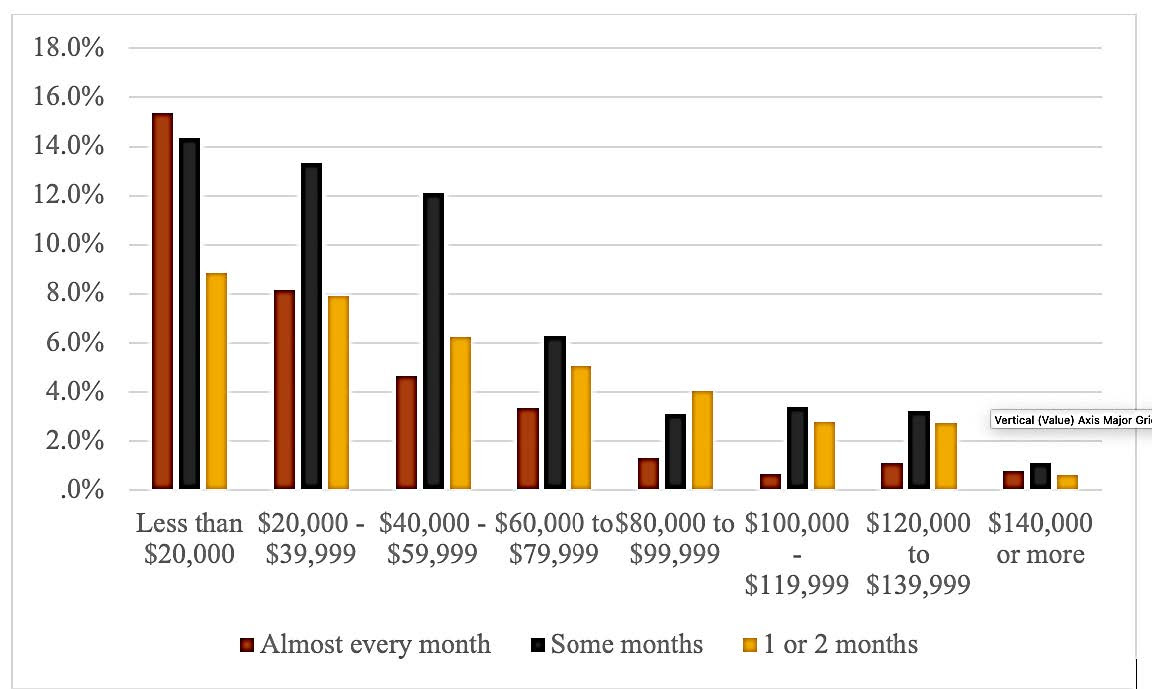
Figure 2. Frequency of Household Receiving Disconnection Notice, by Race

Source: EIA Residential Energy Consumption Survey, 2015 (most recent data available)
Advancing Equity in Utility Regulation is part of the Future Electric Utility Regulation report series, which taps leading thinkers to tackle complex regulatory issues for electricity. The report was funded by the U.S. Department of Energy’s Office of Energy Efficiency and Renewable Energy–Solar Energy Technologies Office and Office of Electricity–Energy Resilience Division as part of DOE’s Grid Modernization Initiative. Lisa Schwartz of Berkeley Lab’s Electricity Markets and Policy Department is the project manager and technical editor. An Advisory Group including state utility regulators, utilities, consumer advocates, environmental justice organizations and other experts provides guidance for the report series.
The report, Advancing Equity in Utility Regulation, can be downloaded at https://emp.lbl.gov/